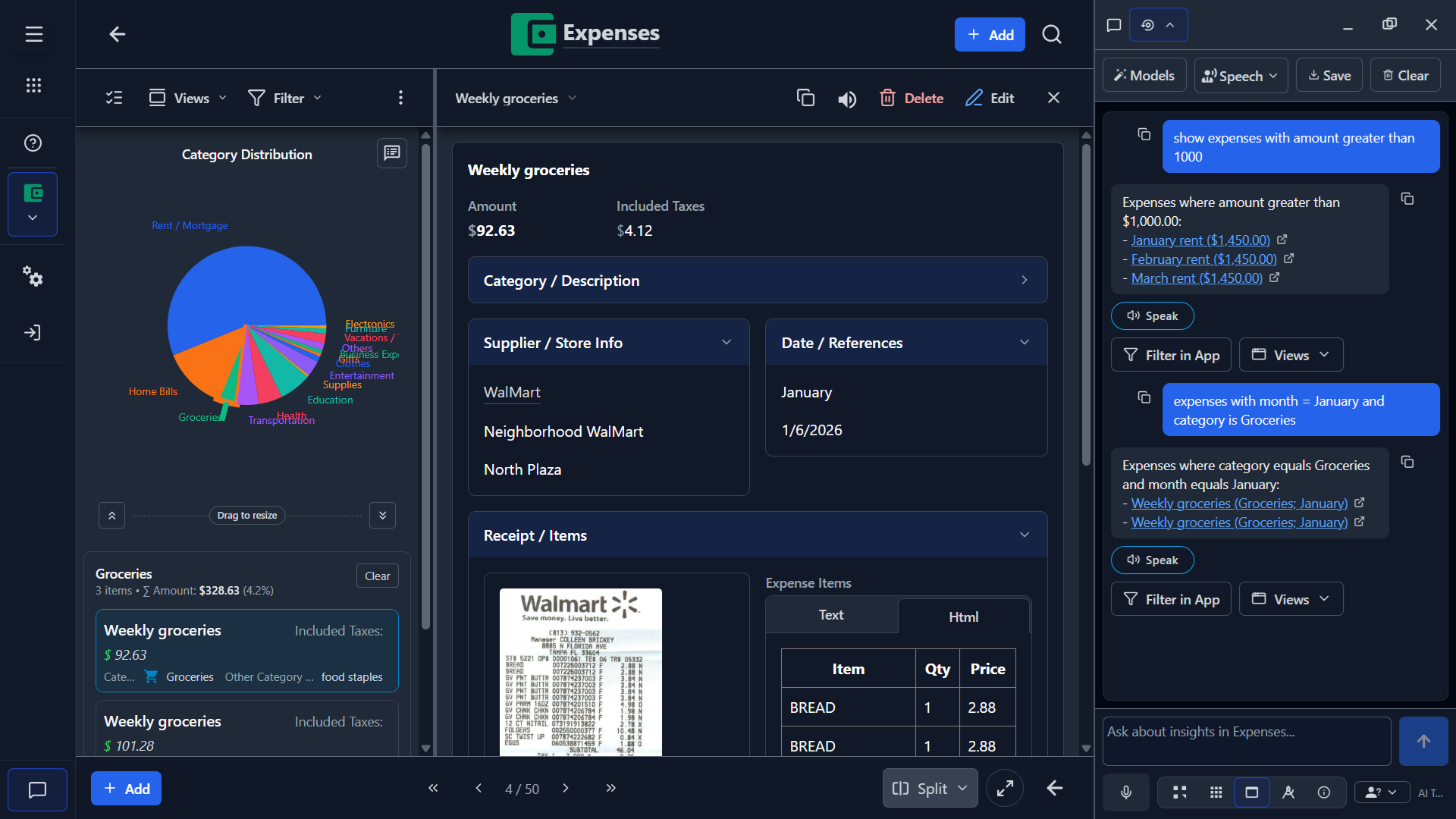
Use Expenses to keep a clear history of purchases, bills, travel costs, and other personal or business spending.
Typical uses include:
tracking daily spending
organizing receipts and purchases
reviewing spending by category
recording business and deductible expenses
comparing costs across months or trips
Core Structure
Each expense record can include the following practical information:
Expense Summary: the main description of the purchase
Amount: the primary monetary value used for totals and comparisons
Included Taxes: a separate tax amount
Category: a grouping such as groceries, transport, or business
Receipt Date and Picture: receipt details and supporting evidence
Business, Deductible, and Deduction: tax and work-related context
Supplier, Store, Location, and Related Event / Trip: useful context for later review
Recommended Workflow
Capture the expense while the details are fresh.
Enter the amount and included taxes separately when applicable.
Choose a category and add supplier or trip information.
Attach a receipt picture or additional description when useful.
Review totals and categories regularly to find spending patterns.
Good Practices
Use a short, recognizable expense summary.
Keep Amount separate from Included Taxes.
Choose categories consistently so reports remain useful.
Add receipt information for purchases that may need verification.
Use Business and Deductible only when they accurately describe the expense.
Summary
Choose the Expenses template when you want a practical personal expense tracker with categories, totals, receipt details, and business-expense context.